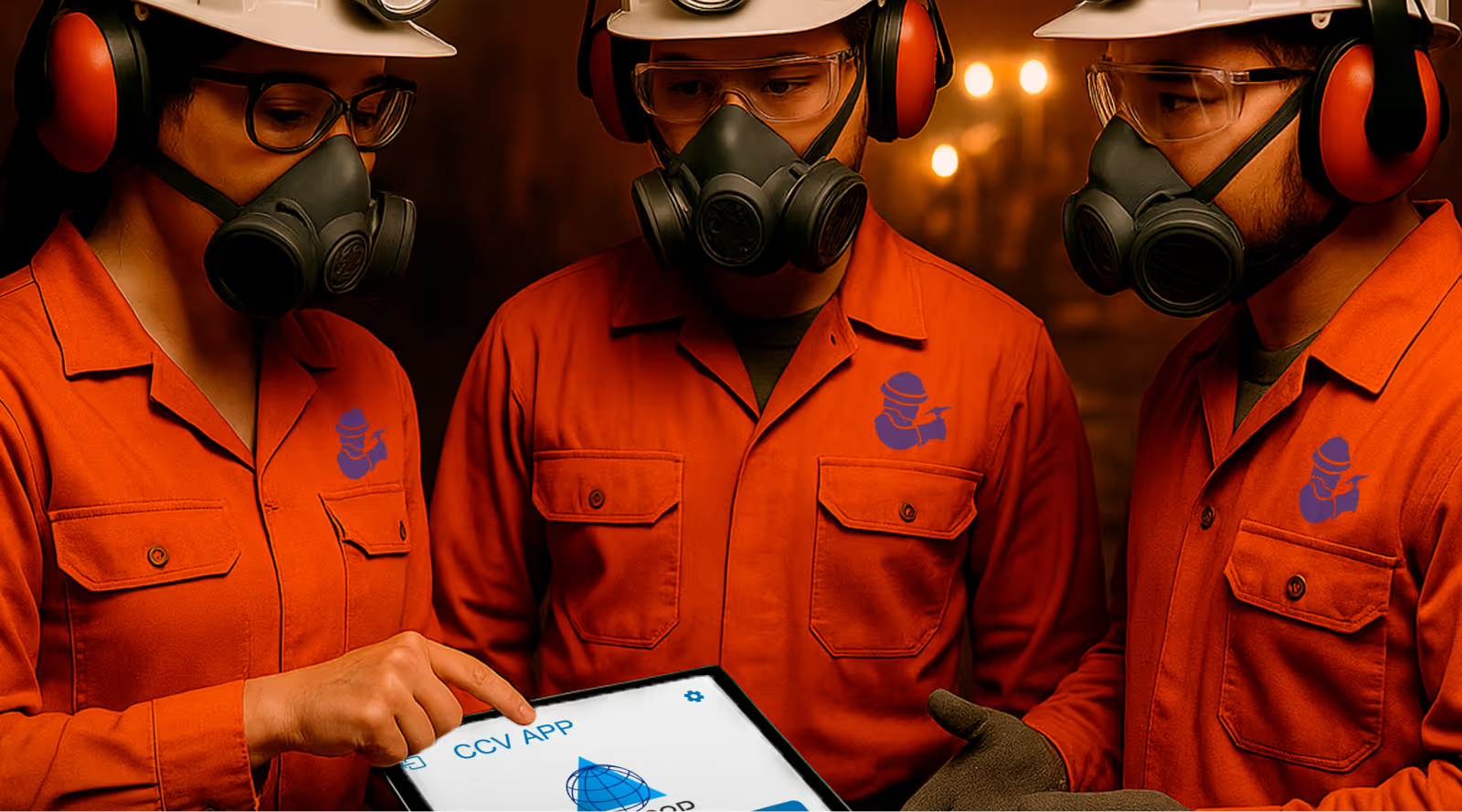
Mining has always been about extracting the Earth’s hidden treasures—but the way we reach them makes all the difference. Two major methods dominate the industry: open-pit and underground mining, each with its own challenges, technologies, and environmental implications.
Open-pit mining is what most people picture when they think of a mine: a large, terraced hole carved into the surface. It’s ideal for shallow deposits, allowing heavy machinery to extract vast quantities of ore efficiently. However, this method often has a greater visual and environmental impact due to land removal and waste rock accumulation.
Underground mining, on the other hand, begins where the sunlight ends. When mineral deposits lie deep below the surface, miners carve tunnels and shafts to reach them. This method minimizes surface disturbance and allows for selective extraction of high-value ores, such as gold and silver, though it demands strict safety standards and specialized expertise.
That’s where CoMinVi excels. Based in Guanajuato, Mexico, CoMinVi is a construction company specialized in underground mining and exploration projects. With over 20 years of experience and more than 36 major projects completed, CoMinVi develops tunnels and infrastructure for leading national and international mining companies. Every month, its teams achieve around 6,000 meters of underground development, delivering over 200,000 tons of production per mine.
Beyond technical precision, CoMinVi stands out for its commitment to safety, quality, and sustainability. Certified under ISO 45001:2018 and ISO 9001:2015, the company integrates advanced technology, social responsibility, and continuous improvement to ensure that every project meets world-class standards.
Did You Know?
While open-pit mines can reach depths of up to 1 km, some underground mines—like Mponeng in South Africa—descend over 4 km below the surface. That’s deeper than most ocean trenches!